Are Those With Family Members in Prison More Likely to Commite Crime
Suggested Citation:"9 Consequences for Families and Children." National Research Council. 2014. The Growth of Incarceration in the United States: Exploring Causes and Consequences. Washington, DC: The National Academies Printing. doi: ten.17226/18613.
×
9
Consequences for Families and Children
The dramatic increase in incarceration rates since 1972 has stimulated widespread interest in how this trend is affecting families and children. As incarceration rates increased, more than families and children had directly feel with imprisonment of a parent (see Figure ix-one). In a calculation of the number of minor children with fathers in prison house or jail in the two decades from 1980 to 2000, Western and Wildeman (2009) plant that the number of children with an incarcerated father increased from almost 350,000 to 2.i million, nearly 3 percent of all U.Southward. children in 2000. According to the most recent estimates from the Bureau of Justice Statistics, 53 percent of those in prison in 2007 had minor children. In that year, an estimated 1.vii million children under age 18 had a parent in country or federal prison (Glaze and Maruschak, 2008). The racial and indigenous disparities of the prison population are reflected in the disparate rates of parental incarceration. In 2007, black and Hispanic children in the United States were seven.v and two.7 times more likely, respectively, than white children to have a parent in prison (Glaze and Maruschak, 2008; run into besides Box nine-1). While the consequences for families and children tin can be expected to vary by race and ethnicity, much of the inquiry reviewed for this written report does not distinguish outcomes by these characteristics. For the few studies that do, the differences and similarities are noted in the text.
This affiliate reviews the empirical show on the consequences of incarceration for family beliefs and kid well-beingness. We focus on incarceration of men because it is more common than that of women and is the bailiwick of the bulk of the available inquiry. The literature on men's incarceration is big and includes ethnographic studies as well as quantitative
Suggested Commendation:"ix Consequences for Families and Children." National Research Council. 2014. The Growth of Incarceration in the Us: Exploring Causes and Consequences. Washington, DC: The National Academies Press. doi: 10.17226/18613.
×
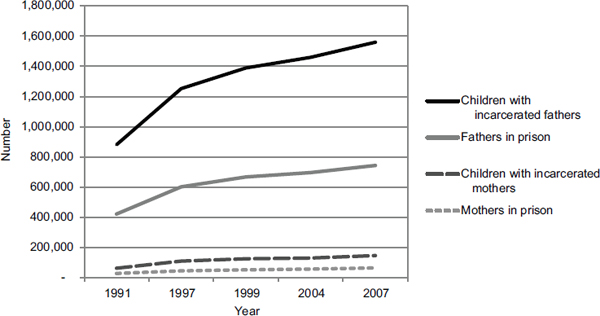
FIGURE ix-ane Estimated number of parents in state and federal prisons and their pocket-sized children, by inmate's gender.
SOURCE: Data from Glaze and Maruschak (2008).
analyses of survey information and administrative records. The literature on women'south incarceration is limited but growing. Nigh of the literature examining the consequences of maternal incarceration for families and children is primarily qualitative or limited to specific field sites. While the risk of maternal imprisonment for children is quite small-scale, it has grown much more than chop-chop in recent years than the take chances of paternal imprisonment (Kruttschnitt, 2010; Wildeman, 2009). The number of children with a female parent in prison increased 131 pct from 1991 to 2007 (see Effigy 9-ane), while the number with a male parent in prison increased 77 percentage (Glaze and Maruschak, 2008). As discussed in Chapter 6, incarcerated mothers are more likely than incarcerated fathers to have lived with their children prior to incarceration. In a 2004 survey of inmates, 55 percentage of female person inmates in country prisons who were parents, compared with 36 percent of male inmates, reported living with their children in the calendar month earlier arrest. Incarcerated parents in federal prisons were more likely to report living with their children before abort (73 percentage of female inmates, compared with 46 percent of male inmates). In addition, incarcerated mothers are more than probable than incarcerated fathers to have come from single-parent households (42 percent versus 17 percent in state prisons, and 52 percent versus nineteen percent in federal prisons) (Glaze and Maruschak, 2008).
The available literature on the consequences of incarceration for families and children focuses on incarceration per se and does not examine the
Suggested Citation:"9 Consequences for Families and Children." National Research Quango. 2014. The Growth of Incarceration in the U.s.a.: Exploring Causes and Consequences. Washington, DC: The National Academies Press. doi: ten.17226/18613.
×
BOX 9-1
Racial and Ethnic Differences in the Cumulative Risk of Parental Imprisonment
Wildeman (2009) calculated the probability that a child would take experienced a parent being sent to prison past the child's teenage years. This cumulative risk of parental imprisonment was calculated for two unlike birth cohorts of children. For white children born in 1978, Wildeman (2009) found that 2.2 to two.4 percent had experienced a mother or male parent being sent to prison past historic period 14. For a birth accomplice built-in 12 years later, in 1990, the cumulative take chances of parental imprisonment for white children had increased to 3.six to 4.2 percent. Amongst black children, parental imprisonment in the 1978 cohort was 13.8 to 15.2 percent, compared with 25.ane to 28.four percent in the 1990 cohort. Similar estimates were developed by Pettit and colleagues (2009), who constitute that in 2009, 15 percent of white children whose parents had non completed high school had experienced a parent being sent to prison by age 17. Among Hispanic children with similarly depression-educated parents, 17 percent had experienced parental imprisonment past age 17. The comparable percentage for African American children is 62 percent (Pettit et al., 2009).
specific effects of the increasing rates of incarceration. Therefore, we cannot hash out any changes in the consequences for families and children of the incarcerated during this flow. We consider what is currently known most the potential consequences for individuals, positive and negative, as a result of having a partner or parent incarcerated and believe that the numbers affected have risen. A few studies, however, discussed later, await at the effect of increasing incarceration on the marriage market and childbearing.
Almost studies observe that incarceration is associated with weaker family unit bonds and lower levels of child well-existence. Men with a history of incarceration are less probable to ally or conjugate and more probable to form unstable partnerships than those who have never been incarcerated, and children of incarcerated fathers tend to showroom more problems in babyhood and adolescence. The picture is not entirely negative, even so. There is testify from at least one state, for instance, that increased rates of incarceration are associated with lower rates of nonmarital childbearing. Moreover, some studies find that the negative association between incarceration and family outcomes is limited to families in which the father was living with the family prior to imprisonment. Finally, at that place is evidence that in cases in which a father is violent, incarceration may actually improve his family'southward well-beingness. The few studies that have examined the consequences for children of incarcerated mothers tend to focus on separation from children and housing stability. These studies frequently detect persistent disadvantage in terms of poor
Suggested Citation:"ix Consequences for Families and Children." National Enquiry Quango. 2014. The Growth of Incarceration in the Us: Exploring Causes and Consequences. Washington, DC: The National Academies Printing. doi: 10.17226/18613.
×
education and financial circumstances, substance abuse, mental affliction, domestic abuse, or a combination of these. At this fourth dimension, findings on the effects of maternal incarceration on child well-being are mixed.
In this affiliate, we begin by reviewing available research on the consequences of men's incarceration for families. We and then examine the minor but growing literature on mothers' incarceration. Next, we discuss the methodological limitations of existing studies in this area. The chapter ends with a review of noesis gaps and terminal remarks.
INCARCERATION OF PARTNERS AND FATHERS
For this review, we looked at both quantitative research and ethnographic studies. Our review of quantitative studies was limited to studies published within the past decade1 that meet four criteria: (1) they are based on probability samples; (ii) response rates are good, and sample compunction is depression; (3) they include skillful measures of incarceration and family/child outcomes; and (4) the temporal ordering of incarceration and the outcome of interest is right. We gave special attending to studies that endeavour to deal with omitted variable bias. (For other reviews of the incarceration literature, see Hagan and Dinovitzer, 1999; Murray et al., 2009; Schnittker et al., 2011; Wakefield and Uggen, 2010; Wildeman and Western, 2010; and Wildeman and Muller 2012). Our review criteria would exclude well-nigh studies linking outcomes to the developmental stage of the child(ren) because these studies typically are based on modest, purposive samples. As a result, our review represents a partial await at the literature on the consequences of incarceration for families and children.
Ethnographic studies by and large practice not permit for statements about causality; however, they depict the experiences of women with incarcerated partners and their children and reveal potential mechanisms for explaining the link between incarceration and family well-being. A key goal of our assessment is to determine whether the use of more than complex statistical methods produces findings that are consequent with those from ethnographic studies and quantitative analyses using simpler statistical methods. To the extent that the findings from the various studies tell a similar story, nosotros have greater conviction in the results.
In this department, we review the consequences of incarceration of men in 4 domains—(1) male-female relationships, (2) economic well-being, (three) parenting, and (4) kid well-being.
_________________
1Recent quantitative work does a ameliorate chore than older studies of accounting or decision-making for possible confounding and unmeasured variables.
Suggested Citation:"9 Consequences for Families and Children." National Research Council. 2014. The Growth of Incarceration in the Usa: Exploring Causes and Consequences. Washington, DC: The National Academies Press. doi: ten.17226/18613.
×
Male-Female Relationships
An extensive body of qualitative inquiry examines relationship dynamics betwixt incarcerated men and their female person partners. These studies find that although these men view union equally a desirable goal (Braman, 2004), incarceration (in addition to the father's criminal activity) poses difficulties for maintaining a relationship, and for those who are non however married, it makes marriage less feasible than for those not incarcerated.
Human relationship problems of the incarcerated are owing to several factors. Outset, women grow weary of the time, energy, and money required to maintain a relationship with an incarcerated partner. Studies find that while family members often view their role as one of moral and emotional support, making regular visits and phone calls and sending letters and packages to prisoners tin can exist difficult and plush (Grinstead et al., 2001), specially when visits crave long-distance travel and hours of waiting (Christian, 2005; Comfort, 2003; Braman, 2004). Second, women may undergo emotional strain from not knowing what their partner is experiencing while incarcerated (Ferraro et al., 1983) or from feeling socially excluded (some study feeling as if they themselves were incarcerated). Upon visiting their partners, for case, women frequently are subject to searches, removal of personal belongings, and the enforcement of strict rules (Fishman, 1990; Condolement, 2003; Braman, 2004). Similarly, following release, partners may become bailiwick to some terms of the parolee's supervision, such as searches of their residence or automobile (Comfort, 2008). Third, either partner may perceive an imbalance in the relationship. Often, this is considering men are unable to contribute as much financially while incarcerated. However, Braman (2004) finds that the perceived imbalance is not always material. Incarceration may diminish trust betwixt partners and augment the perception that individuals need to look out for themselves first, that others are selfish, and that relationships are exploitive. Moreover, Goffman (2009) finds that erstwhile prisoners and men on parole may feel the need to avert or carefully navigate their relationships with partners who may utilize the criminal justice system as a way to control their behavior (due east.yard., a woman may threaten to phone call her partner's parole officer if he continues arriving dwelling house late, becomes involved with some other adult female, or does not contribute enough coin to the household). In communities with high levels of incarcerated males, the overall gender imbalance also may shape behavior, making men more than inclined to seek other partners (Braman, 2004).
Despite these findings, it is of import to annotation that incarceration is not always harmful to relationships. Edin and colleagues (2004) discover that while incarceration may strain the bonds betwixt parents who are in a relationship prior to incarceration, it more often proves benign to couples whose relationship has been significantly hindered past lifestyle choices (well-nigh
Suggested Citation:"nine Consequences for Families and Children." National Inquiry Council. 2014. The Growth of Incarceration in the The states: Exploring Causes and Consequences. Washington, DC: The National Academies Printing. doi: ten.17226/18613.
×
always substance abuse) prior to incarceration. For some of these men, incarceration serves as a turning point, a time to rehabilitate and rebuild ties with their child's mother—at least a cooperative friendship if non a romantic relationship. There is also show that marriage prevents dissolution of relationships. Indeed, Braman (2004) reports that wives of incarcerated men oft say they would accept left their hubby had they not been married to him.
Consistent with the ethnographic literature, quantitative studies find that incarceration increases the economic costs of maintaining a relationship and imposes considerable psychological strain on the wives and partners of men in prison house, especially those who were living with the man prior to his incarceration. At the same time, these studies highlight the fact that for some couples, prison is a time when men can change their lives and reestablish family relationships. A big number of quantitative studies have examined the association between incarceration and such behaviors as marriage, cohabitation, divorce, and repartnering (Apel et al., 2010; Charles and Luoh, 2010; Lewis, 2010; Lopoo and Western, 2005; Massoglia et al., 2011; Turney and Wildeman, 2012; Waller and Swisher, 2006; Western and McLanahan, 2001; Western et al., 2004). Ane written report examines nonmarital childbearing (Mechoulan, 2011). Some of these studies focus on immature adults or men in general, while others focus on parents only. All arrange for observed characteristics, and many utilise rigorous methods.
Lewis (2010) and Waller and Swisher (2006) find evidence that fathers' incarceration reduces subsequent marriage and cohabitation. More rigorous studies, yet, suggest that these effects are not causally related. Using a lagged dependent variable (LDV) model, Lopoo and Western (2005) find no association betwixt men's incarceration and later marriage. Similarly, using data from a accomplice of Dutch men convicted of a crime, Apel and colleagues (2010) detect no result of incarceration on marriage subsequently the beginning year postrelease. Both studies do, withal, find a strong positive upshot on divorce/separation. Married men who were incarcerated were iii times more probable to divorce than married men who were convicted but not incarcerated. These researchers also study that the outcome of incarceration on divorce was stronger amidst men without children and those convicted of serious offenses. This study is particularly noteworthy considering, by focusing exclusively on men with a criminal conviction, it can distinguish the effects of incapacitation from those of conviction.
Two studies use state-level variables to examine how variation in marriage market weather condition due to increasing incarceration rates affect women'southward marriage and fertility. Using state-level, race-specific incarceration rates every bit an indicator of marriage market conditions, Charles and Luoh (2010) discover a negative issue of incarceration on the prevalence of marriage amongst women. They also find a modest and positive effect of incarceration on
Suggested Citation:"9 Consequences for Families and Children." National Inquiry Quango. 2014. The Growth of Incarceration in the United States: Exploring Causes and Consequences. Washington, DC: The National Academies Press. doi: 10.17226/18613.
×
women'south education and labor forcefulness participation. Using a similar approach merely more detailed information on mothers' behavior, Mechoulan (2011) finds a weak negative event of male incarceration on black women's probability of spousal relationship and a strong negative effect on young black women'south nonmarital childbearing. This study also finds a positive link between men'south incarceration and women'due south education and employment. The Mechoulan written report is of particular involvement because it highlights the possible benefits of loftier rates of male incarceration: namely, more than education for women and the prevention of unintended pregnancies amidst young black women. The author is conscientious to note that his analysis does not identify the mechanisms underlying these changes in women'due south behavior, which could be due to the increased incapacitation of more than promiscuous men or changes in women'due south sexual behavior. The author also notes that his findings are driven primarily by changes in incarceration rates in one state—Texas—making it hard to generalize to other parts of the United States.
In addition to the studies described above, which focus on men rather than fathers, at to the lowest degree 1 study attempts to estimate the effect of fathers' incarceration on the stability of parents' unions. Using data from the Frail Families Report, Turney and Wildeman (2012) notice that father's incarceration increases the likelihood that the female parent will end her relationship with him and form a partnership with a new man. The researchers aim to identify the effect of incarceration past employing a rich prepare of control variables (including couple's human relationship quality); they too limit their sample to couples in which the father has a history of incarceration and compare couples who experienced a recent incarceration with those who did non. The latter results can be interpreted every bit the effect of a echo incarceration for men with a history of imprisonment.
The studies described in a higher place have several limitations. First, those that utilise state-level incarceration rates to estimate the event of incarceration on matrimony and divorce must presume that marital status does not affect incarceration (whereas many people would fence information technology does) or that a tertiary variable—such as social norms—is not causing both high rates of incarceration and loftier rates of union instability. A second limitation of most studies is that they ignore unions formed by cohabiting couples. Because wedlock is rare amid men at high risk of incarceration, at to the lowest degree in the U.s.a., the failure to include cohabitating unions makes it hard to draw stiff conclusions virtually the effect of incarceration on union stability. A third limitation is that most studies do not compare the outcome of incarceration with that of other types of forced separation. The ane study that makes this comparison (Massoglia et al., 2011) finds that the destabilizing effects of incarceration are similar to those of armed forces deployment, which suggests that the negative consequences of incarceration are due not to stigma but to the stress associated with incapacitation or perhaps changes in fathers'
Suggested Citation:"ix Consequences for Families and Children." National Research Council. 2014. The Growth of Incarceration in the The states: Exploring Causes and Consequences. Washington, DC: The National Academies Press. doi: 10.17226/18613.
×
behavior. Both war and incarceration are likely to expose men to violence and undermine their relationship skills.
Economic Well-Being
According to the Bureau of Justice Statistics, more than half of fathers in land prison written report being the chief breadwinner in their family (Coat and Maruschak, 2008). Thus the partners and children of these men are likely to experience a loss of economic resources while the provider is in prison. This effect also is probable to persist later the father returns home, given what is known near the link between incarceration and unemployment (see Chapter 8). Ethnographic studies more often than not concord that the incarceration of a partner or begetter can pb to increased economic hardship for members of his family. Financial circumstances are one of the almost frequently cited sources of stress or strain among partners of incarcerated individuals (Carlson and Cavera, 1992; Ferraro et al., 1983). Many affected families already were living in unfavorable economic circumstances prior to the incarceration, and many were dependent on public aid or other financial support. Even so, Arditti and colleagues (2003) find that these families become even more impoverished following the partner'due south or father's incarceration.
The increased economic stress among families affected by incarceration is due to several factors. One is the actress expenses (collect calls, travel costs, sending money and packages) reported past women trying to maintain a relationship with the incarcerated individual (Grinstead et al., 2001; Christian, 2005; Arditti et al., 2003). Other new expenditures include attorney or other legal fees or job loss stemming from increased work-family conflict (Arditti et al., 2003).
Consequent with the ethnographic literature, quantitative studies betoken that the families of men with an incarceration history feel a skilful deal of economic insecurity and hardship, resulting in greater use of public assist among mothers and children. Three studies examine the link between fathers' incarceration and mothers' material hardship (including housing insecurity) (Geller et al., 2009; Geller and Walker, 2012; Schwartz-Soicher et al., 2011); 2 other studies examine the relationship betwixt fathers' incarceration and mothers' welfare use (Sugie, 2012; Walker, 2011); and one study examines the clan between fathers' incarceration and children's homelessness (Wildeman, forthcoming). All of these studies are based on data from the Fragile Families Report.
Geller and Walker (2012) discover that the partners of incarcerated fathers are at increased risk of experiencing homelessness and other types of housing insecurity. These authors use a lagged measure of housing insecurity and a rich set of early-life and contemporaneous covariates. They also
Suggested Commendation:"9 Consequences for Families and Children." National Enquiry Council. 2014. The Growth of Incarceration in the United States: Exploring Causes and Consequences. Washington, DC: The National Academies Press. doi: x.17226/18613.
×
distinguish betwixt recent and early incarceration and find that part of the effect of incarceration on housing insecurity is due to a reduction in financial resources (father'due south earnings or partner's financial contributions). In a third report examining housing insecurity, Wildeman (forthcoming) uses propensity score models and finds that recent paternal incarceration is associated with an increased risk of kid homelessness, peculiarly among black children. Foster and Hagan (2007) also discover an association with increased homelessness amongst adolescent girls.
One study in this group examines the influence of fathers' incarceration on other types of material hardship besides housing. Employing several strategies for determining causality, including fixed effects models, a lagged dependent variable, and a placebo test used to examine whether hereafter incarceration is related to current behaviors, Schwartz-Soicher and colleagues (2011) notice potent bear witness that paternal incarceration leads to increased material hardship for mothers and children, measured every bit mothers' reports of the difficulty faced past their family unit in meeting basic needs. Finally, two studies examine whether fathers' incarceration increases mothers' participation in public help programs. Using propensity score matching, Walker (2011) finds some testify that incarceration may increment the probability of mothers' receipt of both food stamps and Temporary Help for Needy Families (TANF). In dissimilarity, using fixed effects models and a more recent wave of information, Sugie (2012) finds that recent paternal incarceration is associated with mothers' receipt of food stamps and Medicaid/State Children'south Health Insurance Program (SCHIP) assist, simply not TANF. Neither of these studies attempts to estimate the cost of these benefits to taxpayers. On residue, the evidence that father's incarceration increases the family'due south fabric hardship and housing insecurity is strong, especially when the father was living in the household prior to incarceration.
Parenting
Ethnographic work examining the effects of incarceration on parenting focuses primarily on fathers, including their contact with the child and their financial contributions to the family. In discussing these findings, information technology is important to notation that men do not father in a vacuum. Key concepts that influence the experiences of an incarcerated male parent and his children are his relationship with the child'due south female parent and his own behavior and lifestyle before his arrest.
The father'south relationship with his kid's mother appears to play an important role in the father-child relationship during incarceration and after his release from prison house. Fathers who lived with their child prior to incarceration are more probable than nonresident fathers to stay in contact with the child (Martin, 2001). In addition, while some mothers and families
Suggested Citation:"9 Consequences for Families and Children." National Enquiry Council. 2014. The Growth of Incarceration in the United States: Exploring Causes and Consequences. Washington, DC: The National Academies Press. doi: x.17226/18613.
×
provide encouragement for standing contact betwixt the child and his or her father, others promote social exclusion (Nurse, 2004). For example, some family unit members refuse to bring the child when making visits (Martin, 2001), and some fathers experience that mothers use the incarceration to justify limiting or prohibiting contact or painting a negative view of the male parent so the child does not desire to interact with him (Edin et al., 2004).
The begetter'due south lifestyle prior to his incarceration and the quality of the male parent-child relationship also are important influences on the parenting furnishings of incarceration. Every bit Edin and colleagues (2004) annotation, if the father's severe substance abuse or criminal activeness prior to incarceration was plenty to forbid him from making fiscal contributions to the family or developing a shut relationship with his child(ren) prior to his arrest, then his incarceration may serve as a time to rebuild bonds, even allowing parents and children to communicate more than frequently (Giordano, 2010). Some fathers believe their incarceration will serve as an example to their children, discouraging them from making similar mistakes (Martin, 2001). On the other hand, among fathers who previously experienced frequent contact with their children, incarceration nigh e'er proves to exist detrimental—breaking bonds in terms of physical closeness and financial contributions and eroding relationships that may already have been fragile. Most ofttimes, this is considering the mother ends her relationship with the male parent or becomes involved with another human being (Edin et al., 2004). Martin (2001) as well finds that fathers themselves sometimes turn down to accept visits from their child(ren) to protect themselves and their child(ren) emotionally.
Four quantitative studies examine the clan between fathers' incarceration and three outcomes: coparenting, date in activities with the kid, and contact with the kid (Geller and Garfinkel, 2012; Turney and Wildeman, 2012; Waller and Swisher, 2006; Woldoff and Washington, 2008). Mostly, researchers find a negative association betwixt fathers' prior or recent incarceration and each of these behaviors.
Waller and Swisher (2006) notice a negative association between recent and past incarceration and father-child contact and engagement that is mediated by the father-mother relationship. Similarly, using more than rigorous methods and controlling for characteristics likely to be associated with both criminal justice contact and family unit stability, Geller and Garfinkel (2012) find reductions in father-child contact for resident and nonresident fathers who get incarcerated and weaker coparenting relationships with the child's mother following release. Turney and Wildeman (2012) use a variety of interpretation strategies, including lagged dependent variables, fixed effects, propensity score matching, and conditioning on ever-incarcerated fathers. They find that amidst fathers who were living with their children, the negative effects of incarceration are robust across all measures of involvement (appointment, shared responsibility in parenting, and cooperation in
Suggested Citation:"9 Consequences for Families and Children." National Inquiry Council. 2014. The Growth of Incarceration in the United states of america: Exploring Causes and Consequences. Washington, DC: The National Academies Press. doi: ten.17226/18613.
×
parenting) and all strategies. They find further that lower levels of begetter interest are due to changes in the quality of the parental relationship, changes in fathers' economic weather, and changes in fathers' health. Effects are similar across racial/ethnic groups. These researchers also examine the effects of fathers' incarceration on mothers' parenting and find that they are much weaker. Amongst fathers who were not living with their children prior to incarceration, however, the effects are smaller and disappear in fixed effects and other models. The latter finding is likely due to the fact that a large proportion of nonresident fathers have no contact with their children (Amato et al., 2009). Taken together, these studies signal that incarceration reduces paternal involvement in families in which the begetter was living with the kid prior to incarceration. A major limitation is that the analyses for incarcerated fathers are based on one source of information—the Frail Families Report.
Child Well-Existence
Negative outcomes for children are commonly reported in open up-concluded interviews with fathers and their families. Mothers and some fathers believe their children perform more poorly or have more difficulties in school post-obit their father's incarceration (Braman, 2004; Martin, 2001; Arditti et al., 2003). And many parents report negative behavioral changes in their children, including becoming more private or withdrawn (Braman, 2004), not listening to adults (Martin, 2001), condign irritable, or showing signs of behavioral regression (Arditti et al., 2003). Some studies also provide testify of changes in children'southward emotional or mental health, with children experiencing such feelings as shame or embarrassment about their father's incarceration; emotional strain, including a conventionalities that the father did non desire to live at home; a loss of trust in the father (Martin, 2001); grief or depression (Arditti et al., 2003); or even guilt (Giordano, 2010).
Despite these negative experiences, periods of incarceration are not ever viewed as the about challenging circumstance these children confront (Giordano, 2010). A begetter'southward severe substance habit or tearing behavior at domicile may lead some children to feel happier when their begetter is incarcerated. Imprisonment may requite the father an opportunity to receive help for his issues and even communicate more with the child (Edin et al., 2004). In such cases, a male parent's release from prison house may exist emotionally complex, being both a happy and stressful life event for the kid.
In summary, qualitative studies for the well-nigh part indicate that fathers' incarceration is stressful for children, increasing both depression and feet as well as antisocial behavior. There is likewise evidence that children of fathers who are violent or have serious substance corruption issues are happier when their father is removed from the household.
Suggested Citation:"ix Consequences for Families and Children." National Research Council. 2014. The Growth of Incarceration in the United States: Exploring Causes and Consequences. Washington, DC: The National Academies Printing. doi: 10.17226/18613.
×
The majority of quantitative studies focus on children'southward problem behaviors, which include both internalizing problems (low and anxiety) and externalizing problems (aggression and delinquency). Early and persistent aggression and conduct issues are known to be associated with a host of negative outcomes in machismo, including criminal behavior (Farrington, 1991; Babinski et al., 2003). A few studies investigate the influence of fathers' incarceration on concrete wellness, cognitive ability, and grades and educational attainment.
The strongest and most consistent findings regarding effects of fathers' incarceration on kid well-being are for behavior issues and delinquency (also run across the meta-analysis of Murray et al., 2012a). Nigh studies examining behavior issues focus on young children. However, results of these studies by and large are consistent with those of studies looking at older children. In both age groups, researchers find that fathers' incarceration increases externalizing behaviors, peculiarly aggression.
Adjusting for other characteristics, Craigie (2011) finds a positive association between fathers' incarceration and children's externalizing behavior problems among blacks (see besides Perry and Brilliant, 2012) and Hispanics, simply not whites. Comparing a sample of children whose fathers were incarcerated subsequently their birth with children whose fathers had been incarcerated before birth, Johnson (2009) finds a positive association between incarceration and externalizing behavior, but only for the former children. Walker (2011) uses propensity score matching and finds a similar association with aggressive beliefs at age v (simply not at age 3, when aggressive behavior is more common). Using similar methods, Haskins (2012) finds a positive association between fathers' incarceration and externalizing behavior and attention problems at historic period 5. Using a series of placebo tests, stock-still effects models, and propensity score matching, Wildeman (2010) finds that paternal incarceration increases physical assailment among boys but not girls (encounter too Geller et al., 2009), especially among children whose fathers were incarcerated for a irenic criminal offense or were not abusive to the child's mother prior to incarceration. Using a similar set of tests, Geller and colleagues (2012) detect that the effect of incarceration on young children's aggressive behaviors is nigh twice equally big for boys as for girls, only significant for both genders; they detect significant (though weaker) effects for fathers who were not living with their child prior to incarceration. Aggressive behavior is much more common amidst boys than among girls in this age group, which may account for the gender departure in children'southward response to father's incarceration. Finally, Wakefield and Wildeman (2011) find that beyond all age groups (immature children to immature adults), fathers' incarceration increases assailment, especially amid boys.
These researchers find no show that increased behavior problems and assailment resulting from paternal incarceration differ by race. Nevertheless,
Suggested Citation:"9 Consequences for Families and Children." National Research Quango. 2014. The Growth of Incarceration in the United States: Exploring Causes and Consequences. Washington, DC: The National Academies Printing. doi: 10.17226/18613.
×
they exercise note that in cases in which there is a history of domestic abuse, paternal incarceration may actually reduce aggressive behavior in children. These findings are consequent with inquiry of Jaffe and colleagues (2003) showing that children's response to their father'south get out from the household depends on the nature of the female parent-father relationship, and suggest that the association between incarceration and aggression is complex.
Another type of trouble behavior examined by researchers is delinquency, specifically among older children. Using nationally representative longitudinal data, Roettger and Swisher (2011) find fathers' incarceration to be positively associated with the propensity of adolescent and young adult males for delinquency and adventure of arrest. They observe no interactions with race or ethnicity and note that father's incarceration both before and after birth is associated with these outcomes, although the relationships are stronger when the incarceration occurred during the child'due south life. Using data from the Pittsburgh Youth Study, Murray and colleagues (2012b) find that parental incarceration is not associated with boys' marijuana utilise simply is positively associated with theft; in this written report, the associations are stronger among white than among black youth. Parenting and peer processes following parental incarceration explained about half of the clan. Neither of these studies examines the effect of fathers' incarceration on malversation amidst boyish girls. Using a nationally representative sample of Dutch men bedevilled in 1977, van de Rakt and colleagues (2012) find a moderate positive association between paternal imprisonment and child convictions (odds 1.2 times greater than for children whose fathers never went to prison). The issue was peculiarly pronounced when the father was imprisoned before the child's twelfth altogether. Once again, this study is noteworthy because it is able to estimate the effect of incarceration cyberspace of conviction.
The evidence for children'southward internalizing beliefs (depression and anxiety) is more mixed. Craigie (2011) and Geller and colleagues (2012) find no evidence of an event on internalizing behavior among young children. Similarly, Murray and colleagues (2012b) find no significant influence on depression among adolescents. In dissimilarity, Wakefield and Wildeman (2011) find that paternal incarceration increases internalizing behavior amid adolescents and young adults. Part of this disparity in results may be due to the fact that internalizing of problems (depression) ofttimes does non appear until adolescence.
Two studies examine the furnishings of incarceration on children'southward physical wellness. Using state and year stock-still furnishings, Wildeman (2012) finds that paternal incarceration increases the risk of early infant mortality, but only among infants whose fathers were not abusive. Similarly, Roettger and Boardman (2012) find that fathers' incarceration is positively associated with higher body mass index (BMI) in young developed women, an upshot that operates primarily through depression. Foster and Hagan (2007) discover show that
Suggested Citation:"nine Consequences for Families and Children." National Research Council. 2014. The Growth of Incarceration in the The states: Exploring Causes and Consequences. Washington, DC: The National Academies Press. doi: 10.17226/18613.
×
fathers' absence due to incarceration increases daughters' take chances of physical and sexual abuse and fail.
Finally, a few studies examine the effects of fathers' incarceration on children's cognitive ability and academic functioning, with somewhat mixed results. Using propensity score matching, Walker (2011) finds a negative effect of incarceration on cognitive ability at age five, whereas Haskins (2012) and Geller and colleagues (2012), using similar and more rigorous methods, find no effect at age five. Murray and colleagues (2012b) observe no relationship betwixt parental incarceration and academic functioning afterward adjusting for youth behavior prior to incarceration. Hagan and Foster (2012) find a negative association between fathers' incarceration (at the individual and school levels) and children'due south form betoken boilerplate (GPA), educational attainment, and college completion. Finally, Foster and Hagan (2009), using matching techniques, find a negative outcome of incarceration on years of educational activity, fifty-fifty after adjusting for GPA and other characteristics, with variation by race/ethnicity. On balance, the findings for education propose that insofar as fathers' incarceration has a causal effect on educational attainment, it operates primarily through behavior problems and socioemotional adjustment rather than through cognitive ability.
INCARCERATION OF MOTHERS
More than 200,000 women are in jails or prisons in the U.s., representing most 1-third of incarcerated females worldwide (Walmsley, 2012). The past three to iv decades have seen rapid growth in women's incarceration rates—a rise of 646 percentage since 1980 compared with a 419 per centum rise for men (Mauer, 2013; Frost et al., 2006). Prior to 2000, nearly of this growth occurred among African American women. In 2000, blackness women were imprisoned at vi times the charge per unit of white women (Guerino et al., 2011; Mauer, 2013). Between 2000 and 2009, however, the rate declined for black women past 31 percent while continuing to increment for white and Hispanic women (by 47 and 23 percent, respectively). Mauer (2013) suggests that much of this recent shift was due to a reduction in drug-related incarcerations among blackness women and an increase in methamphetamine prosecutions amongst white women.
As the rate of women'southward incarceration has grown, so has the chance of maternal imprisonment (Kruttschnitt, 2010). One in 30 children born in 1990 had a female parent incarcerated by age fourteen, compared with 1 in 60 born in 1978 (Wildeman, 2009). Scholars have been examining the experiences of incarcerated women and their children for decades, with a majority of studies using small convenience samples and qualitative methods (for reviews, see Bloom and Brown, 2011; Henriques and Manatu-Rupert, 2001; and Myers et al., 1999). These studies highlight the prevalence of economic and
Suggested Commendation:"9 Consequences for Families and Children." National Enquiry Council. 2014. The Growth of Incarceration in the Us: Exploring Causes and Consequences. Washington, DC: The National Academies Printing. doi: 10.17226/18613.
×
educational disadvantage, substance apply, mental illness, and domestic abuse amidst mothers with an incarceration history, with some mothers portraying jail or prison house equally a "safe haven" from battering and bug related to substance addiction (Richie, 1996; Greene et al., 2000; Henriques and Jones-Chocolate-brown, 2000).
Nearly two-thirds of mothers in country prisons were living with their child(ren) prior to their incarceration, many in unmarried-parent households (Coat and Maruschak, 2008; Mumola, 2000). Thus, a predominant theme in the literature on incarcerated mothers is mother-child separation. Using single-prison house samples, Poehlmann (2005b, 2005c) describes the initial separation as 1 of intense distress for both mothers and children (see too Fishman, 1983). During the incarceration menses, mother-child contact may be limited every bit a result of travel costs or female parent-caregiver human relationship issues (Flower and Steinhart, 1993; Hairston, 1991). Less female parent-child contact may exist associated with mothers' increased depressive symptoms (Poehlmann, 2005b). Other studies observe that maternal incarceration is associated with a host of negative child outcomes, including poor academic performance, classroom beliefs issues, interruption, and delinquency (run across the review of Myers et al., 1999). Poehlmann (2005a) examines the role of caregiver arrangements and modified dwelling house environments during mothers' incarceration and finds that amidst children of incarcerated mothers, cognitive outcomes may exist influenced past caregiver socioeconomic characteristics and the quality of the habitation environment. This topic merits more than attention in future enquiry.
A few recent studies utilise longitudinal data and more rigorous methods to examine the issue of maternal incarceration on child academic functioning, housing arrangements, and behavioral outcomes. Using data from 2 large samples of children in Chicago public schools and propensity score and fixed furnishings modeling techniques, Cho (2009a, 2009b) finds no association betwixt maternal incarceration and children's standardized test scores, just a negative result on grade retention in the years immediately post-obit mother'south prison entry. Another written report (Cho, 2011), using administrative records and event history assay, finds that adolescents are at higher risk of dropping out of school in the twelvemonth their female parent enters jail or prison.
Ii studies use data from the Fragile Families Study to examine the effect of maternal incarceration on housing instability. Geller and colleagues (2009) find that incarceration is associated with an increment in the likelihood of residential mobility. Wildeman (forthcoming) finds no effect on kid homelessness. This latter finding may be due to the fact that children of incarcerated mothers are more than likely than children of incarcerated fathers to enter foster care (Dallaire, 2007; Mumola, 2000).
Finally, Wildeman and Turney (forthcoming) use information from the Fragile Families Written report to examine the effect of maternal incarceration on child
Suggested Citation:"9 Consequences for Families and Children." National Research Quango. 2014. The Growth of Incarceration in the United states: Exploring Causes and Consequences. Washington, DC: The National Academies Press. doi: 10.17226/18613.
×
behavior problems. Using propensity score models for both parent and teacher reports, they find no clan betwixt mothers' incarceration and children's behavior problems at age ix. Dallaire (2007), however, finds that developed children of incarcerated mothers are more likely than developed children of incarcerated fathers to be incarcerated.
Taken together, then, the small corporeality of evidence on the event of maternal incarceration on overall child well-being is mixed. This bailiwick, too, deserves more than attention in hereafter inquiry.
METHODOLOGICAL LIMITATIONS
To put the above discussion in proper context, it is important to notation the major limitations of the studies reviewed. Offset, all of the ethnographies and many of the quantitative studies are based on convenience samples obtained in specific cities or communities. While these studies provide rich descriptions of the family unit lives of men and women with an incarceration history, and while they generate a multitude of intriguing hypotheses, their findings may not be generalizable to families in other cities or other parts of the country.
2nd, although a number of more recent quantitative studies employ probability samples of the national population, these studies are based on simply three information sets: the Frail Families Study, the National Longitudinal Study of Boyish Health, and the Console Report of Income Dynamics. At this time, these are the only big, nationally representative data sets that include information on incarceration. The field would benefit and more would exist known about outcomes for families if other big national surveys did more to capture data from families with incarcerated or previously incarcerated parents.
A third limitation involves the measurement of other criminal justice contact or criminal behavior. With a few exceptions, studies practise non take account of factors that precede incarceration (offending, arrests, and convictions), and so the consequences of imprisonment are not sharply distinguished from those of other factors.
A fourth, and perhaps most important, limitation of the literature is that all of the studies are based on observational rather than experimental information. Men who become to prison are different from other men in ways that are likely to touch on their family relationships besides as their chances of incarceration. As noted elsewhere in this report (see Chapters ii and 7), men and women with an incarceration history are less educated and more likely to take mental health issues and alcohol and drug addictions than the full general population. In turn, their families are likely to be unstable and to experience economic hardships and their children to be at risk of doing less well in school regardless of whether the father or female parent spends time in jail;
Suggested Citation:"9 Consequences for Families and Children." National Inquiry Council. 2014. The Growth of Incarceration in the U.s.a.: Exploring Causes and Consequences. Washington, DC: The National Academies Printing. doi: 10.17226/18613.
×
BOX nine-2
Techniques for Dealing with Omitted Variable Bias
Researchers apply a multifariousness of statistical techniques to deal with the problem of omitted variable bias. The oldest and most widely used is to control for all of the characteristics that might affect both incarceration and family well-being. Unfortunately, this technique is express because the data sets available for examining the effects of incarceration do not measure out all the relevant characteristics.
A 2d technique is to mensurate the outcome variable of interest before and afterwards fathers' incarceration to see whether spending time in prison is associated with a change in the outcome. This arroyo—the lagged dependent variable (LDV) model—requires longitudinal data and allows the researcher to approximate the upshot of incarceration internet of the factors that affect the preincarceration outcome. In one of the studies we examined (Geller et al., 2012), for example, the researchers controlled for children'southward behavior problems at age iii and looked at whether those whose fathers went to jail or prison when the children were between ages 3 and v were more likely to exhibit behavior problems at age 5 than those whose fathers did non go to jail or prison. Longitudinal data also allow the researcher to conduct a placebo test to meet whether fathers' future incarceration predicts current family unit problems. In the example given above, the researchers looked at whether children whose fathers were incarcerated when the children were betwixt ages 3 and 5 showed higher levels of behavior problems at age 3. A positive outcome would bespeak that something other than incarceration was causing the behavior problems.
Other researchers utilize longitudinal data to estimate a fixed effects model, which examines the association between a change in incarceration and a change in behavior. While this model does a better chore than the LDV model of controlling for omitted variable bias, information technology does not eliminate the possibility that a alter in an omitted variable might have led to the incarceration besides every bit the change in behavior. Continuing with the previous case, a father might have become
that is, the correlation between incarceration and family hardship may be due to atmospheric condition other than incarceration. The failure to accept account of characteristics that affect incarceration as well as social and economic hardships leads to what researchers phone call "omitted variable bias." This problem is endemic in the literature on incarceration effects.
The best way to bargain with omitted variable bias is to run an experiment in which people are randomly assigned to incarceration status. Because people cannot be randomly assigned to prison,2 researchers have used a
_________________
twoNotation, however, that some studies have tested an overnight stay in jail every bit treatment (Sherman and Berk, 1984). In their report of police interventions for family violence, Sherman and Berk (1984), for example, found that a night in jail was not strongly associated with reduced offending. In addition, researchers take considered differing practices equally natural experiments. In a recent study, Loeffler (2013) used randomization to judges, which led to variation in fourth dimension
Suggested Citation:"9 Consequences for Families and Children." National Enquiry Council. 2014. The Growth of Incarceration in the United States: Exploring Causes and Consequences. Washington, DC: The National Academies Press. doi: 10.17226/18613.
×
unemployed during the ii-twelvemonth period after the kid reached historic period 3 and before age v and responded by engaging in criminal activity that ultimately led to incarceration. In this example, the male parent's unemployment and criminal behavior may also have a function in the child's increasing behavior bug, or may be the chief causes rather than incarceration.
A fifth technique is to use a country policy, or natural experiment, to judge the consequence of incarceration on family well-beingness. For example, several researchers have used state differences in race-specific incarceration rates to determine whether these policies and practices affect family germination behaviors, such as marriage, divorce, and nonmarital childbearing. By using a state-level measure of incarceration, the researcher avoids the problem of omitted variable bias at the individual level. But the problem still exists at the amass level unless the researcher can find a policy or practice that affects an private's chances of incarceration simply is unrelated to the outcome of interest except via this pathway.
Finally, some researchers employ a propensity score matching approach, which entails calculating a probability of incarceration for each man (or father) in the report, and and then comparison the family unit outcomes of men with the same probability (or propensity) only different incarceration experiences to see whether they differ. Although this approach does not bargain with omitted variable bias—propensity scores are based on observed variables only—it has certain advantages over standard regression analyses and may yield more accurate estimates of the association betwixt incarceration and outcomes of interest. 1 of the more convincing studies is ane that starts with a sample of convicted men, constructs a matched sample of men with the same propensity for incarceration, and and so looks at whether those who were incarcerated had dissimilar outcomes than those who did not go to jail or prison (Apel et al., 2010). This study found that men who were incarcerated were more likely to divorce than their counterparts who were not incarcerated.
diversity of statistical techniques to deal with the problem of omitted variable bias (see Box 9-ii).
KNOWLEDGE GAPS
As discussed to a higher place, the studies reviewed in this affiliate have several limitations. A more robust research program is needed to respond the questions considered hither with greater conviction. We offer the following observations on how to accost some of the knowledge gaps in this surface area.
___________________________________________________
served, to appraise the effects of incarceration on offense and unemployment. While this approach has limitations, it would provide additional information to be considered along with findings based on the other approaches to dealing with omitted variable bias.
Suggested Citation:"nine Consequences for Families and Children." National Research Council. 2014. The Growth of Incarceration in the United States: Exploring Causes and Consequences. Washington, DC: The National Academies Press. doi: 10.17226/18613.
×
Understanding Variations
More work is needed to understand how the effects of fathers' incarceration on families and children vary depending on living arrangements prior to incarceration, the quality of relationships, and the ages and developmental stages of affected children. Information on the level of interest and quality of the parental relationship prior to conviction could be incorporated into an experiment, as well as longitudinal data drove. Note, nonetheless, that measuring fathers' residence would be a claiming considering men who are likely to spend fourth dimension in prison house and jail also are likely to exist involved in multiple households before and subsequently release.
Still missing is important descriptive information that bears on the causal questions at paw. The field would benefit from tackling the problem of omitted variables past observing them. How dangerous, violent, drug involved, and/or mentally unstable are the individuals who go to prison house? What do their personal histories (as children) of family instability and family violence look like? How does incarceration contribute to family complication—multiple partners, attachments, and households?
The drove of longitudinal data tracking individuals before and after their contact with the criminal justice system is needed. Partnering with existing longitudinal studies would exist a useful avenue to explore to this end. Indicators of the quality of family life need to be tracked to better empathize the influences on spousal and/or parental behaviors.
Aggregate Effects
Little attention has to engagement been paid to estimating the aggregate effects of loftier rates of incarceration on family stability, poverty and economic well-beingness, and child well-existence. Given that incarceration is concentrated amongst men with low education, one might look that recent trends in incarceration take affected aggregate poverty rates as well as trends in family structure and intergenerational mobility. To address aggregate furnishings, better estimates are needed of the proportion of families and children exposed to incarceration and the differential effects of incarceration depending on living arrangements and the quality of preincarceration relationships. Estimates also are needed of the proportion of families probable to do good from a family fellow member's incarceration.
Decision
This affiliate has reviewed the literature on the consequences of parental incarceration for the children and families of those incarcerated,
Suggested Citation:"9 Consequences for Families and Children." National Enquiry Council. 2014. The Growth of Incarceration in the United States: Exploring Causes and Consequences. Washington, DC: The National Academies Press. doi: 10.17226/18613.
×
a question of importance at whatever level of incarceration but particularly in the current era of high U.Southward. incarceration rates. Our literature review has included both recent ethnographic studies and quantitative analyses and studies using convenience samples also as population-based samples. Such a review represents a fractional await at the literature on the consequences of incarceration for families and children; a more thorough review would be beyond the scope of this written report. All the same, our review suffices to provide a sense of the consequences. Although the prove from private studies is express and findings across some studies are mixed, our review leads to the conclusion that parental incarceration, on balance, is associated with poorer outcomes for families and children. Whether these associations reflect causality is much less certain.
Nosotros discover consistent evidence, in both the ethnographic and quantitative studies, of a link between men's incarceration and instability in male-female unions. Nosotros observe a strong and consistent link betwixt fathers' incarceration and family unit economic hardship, including housing insecurity, difficulty meeting basic needs, and use of public aid. Incarceration tends to reduce fathers' interest in the lives of their children subsequently release, in large role because it undermines the coparenting relationship with the child'due south female parent. Finally, both ethnographic and quantitative studies indicate that fathers' incarceration increases children'due south behavior problems, notably aggression and delinquency. The consequences are particularly pronounced among boys and among children who were living with and positively involved with their father at the time of his incarceration. Recent surveys signal that roughly iv of x incarcerated fathers report living with their children prior to incarceration. Of involvement, although father'due south incarceration is associated with poorer grades and lower educational attainment, it is not associated with lower cerebral ability. Rather, school failure appears to ascend from social-emotional problems rather than a lack of intellectual capacity.
In reviewing the literature on the consequences of parental incarceration for the families and children of those incarcerated, we have been mindful of the wide charge to this committee. Ideally, the research evidence would help in determining whether the dramatic increase in incarceration rates over the by iv decades, viewed as a distinct miracle, has affected, for better or worse, the families and children of those incarcerated. There are, nonetheless, no studies explicitly examining the effect of the prison house buildup on the families and children of incarcerated parents. As a statistical matter, the number of children with a parent in prison house continued to grow with increasing incarceration, reaching an estimated 1.7 million in 2007. Thus we might hypothesize that greater numbers of individuals and families take experienced the predominantly negative consequences of a partner's or
Suggested Citation:"9 Consequences for Families and Children." National Research Council. 2014. The Growth of Incarceration in the United States: Exploring Causes and Consequences. Washington, DC: The National Academies Press. doi: 10.17226/18613.
×
parent's incarceration as the extent of incarceration has expanded, but that hypothesis has not been tested. There remain unanswered questions nearly the aggregate effects of the incarceration buildup. Nonetheless, the close correlation betwixt having a partner or parent who has been incarcerated and poor outcomes among families and children is unmistakable.
Source: https://www.nap.edu/read/18613/chapter/11
0 Response to "Are Those With Family Members in Prison More Likely to Commite Crime"
Postar um comentário